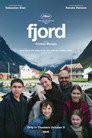

The 79th Cannes Film Festival closed with Romanian filmmaker Cristian Mungiu’s Fjord winning the Palme d’Or, cementing his place among Cannes royalty and making him only the tenth director in the festival’s history to claim its top prize twice. Starring Sebastian Stan and Renate Reinsve, the film follows a mixed Romanian-Norwegian couple whose attempt at a fresh start in a remote fjord village slowly unravels after tensions with another local family.
For Mungiu, whose 4 Months, 3 Weeks and 2 Days won the Palme d’Or nearly two decades ago, the victory signals a return to Cannes’ highest pedestal with a film critics described as morally complex and emotionally exacting. Deadline called Fjord a “fiercely intelligent and gripping” drama that refuses easy answers.
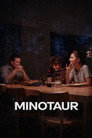
The Grand Prize, Cannes’ second-highest honour, went to Russian filmmaker Andreï Zviaguintsev for Minotaur, adding a political dimension to the evening. During his acceptance speech, the director reportedly called on Russian President Vladimir Putin to stop “the butchery”, one of the ceremony’s most openly political moments.
The festival’s directing honours reflected a jury unwilling to settle on a single vision. Spanish directing duo Javier Calvo and Javier Ambrossi shared the Best Director award for La Bola Negra with Polish auteur Paweł Pawlikowski for Fatherland. Meanwhile, German filmmaker Valeska Grisebach’s Bulgaria-set The Dreamed Adventure claimed the Jury Prize.
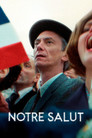
Performance awards also resulted in rare ties. Virginie Efira and Tao Okamoto jointly won Best Actress for All Of A Sudden, while Emmanuel Macchia and Valentin Campagne shared Best Actor for their performances in Lukas Dhont’s First World War drama Coward. Emmanuel Marre won Best Screenplay for A Man Of His Time (Notre Salut), a drama set in occupied France examining questions of resistance and collaboration during the early years of World War II.
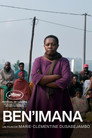
Outside the Competition slate, the evening also made room for historic firsts. Rwandan filmmaker Marie-Clémentine Dusabejambo won the Caméra d’Or for Ben’Imana, becoming the first Rwandan director to receive the award for a debut feature. The film, also Rwanda’s first Cannes selection, explores justice and reconciliation in the aftermath of the 1994 genocide against the Tutsi. Argentine director Federico Luis took home the Short Film Palme d’Or for For The Opponents, a coming-of-age story set in a tough Mexican neighbourhood.
The ceremony also honoured Barbra Streisand with an honorary Palme d’Or, recognising a career that reshaped the possibilities for women in Hollywood. Unable to attend due to health reasons, the actor-filmmaker sent a video message reflecting on cinema’s global influence on her life and career.
Cannes 2026: Major Winners
Palme d’Or: Fjord — Cristian Mungiu
Grand Prize: Minotaur — Andreï Zviaguintsev
Jury Prize: The Dreamed Adventure — Valeska Grisebach
Best Director (shared): Javier Calvo & Javier Ambrossi (La Bola Negra), Paweł Pawlikowski (Fatherland)
Best Actress (shared): Virginie Efira & Tao Okamoto — All Of A Sudden
Best Actor (shared): Emmanuel Macchia & Valentin Campagne — Coward
Best Screenplay: Emmanuel Marre — A Man Of His Time (Notre Salut)
Caméra d’Or: Ben’Imana — Marie-Clémentine Dusabejambo
Short Film Palme d’Or: For The Opponents — Federico Luis
Honorary Palme d’Or: Barbra Streisand